What about the Robotic Process Automation will trend in 2020?

Robotic Process Automation (RPA) is a technology that allows the configuration of computer software and thus enables a “robot” to carry out certain repetitive tasks that previously required human resources. It is responsible for the integration of data whenever a human-digital interaction surfaces and responds to it accordingly by manipulating various applications and hence communicates efficiently over digital platforms that participate in the given business process.

RPA robots are capable of imitating several human tasks, such as copying and pasting data, moving data, logging into various applications, opening e-mails and reading attachments, making calculations, surfing the internet for useful data, reading and writing databases, and a lot more. This means that the valuable human resource could be put to work on high-profile business activities rather than in these mundane rules-based workloads, which can be automated in an ERP-based system. And with an added plus point- robots do not sleep!
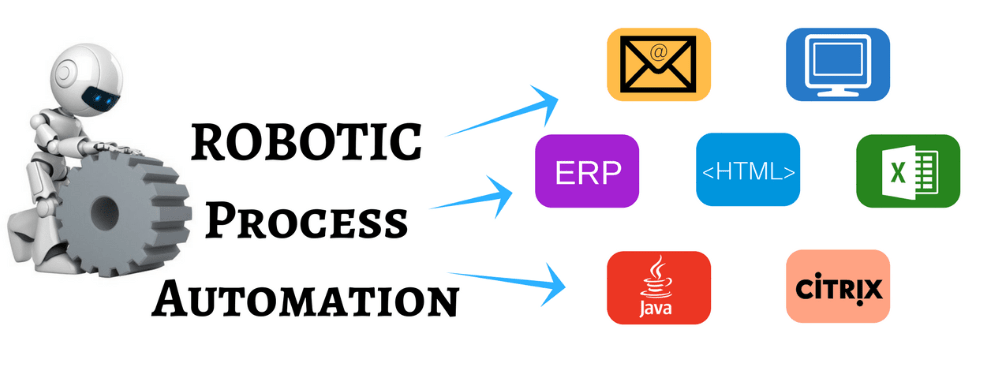

How does this work?

The fundamental unit is the bot. 

These robots can be controlled through an employee’s desktop or even the cloud. It is almost necessary to program these and integrate them with the enterprise applications, because even though screen scraping is possible, it is prone to errors since this is a lot of data we are looking at.
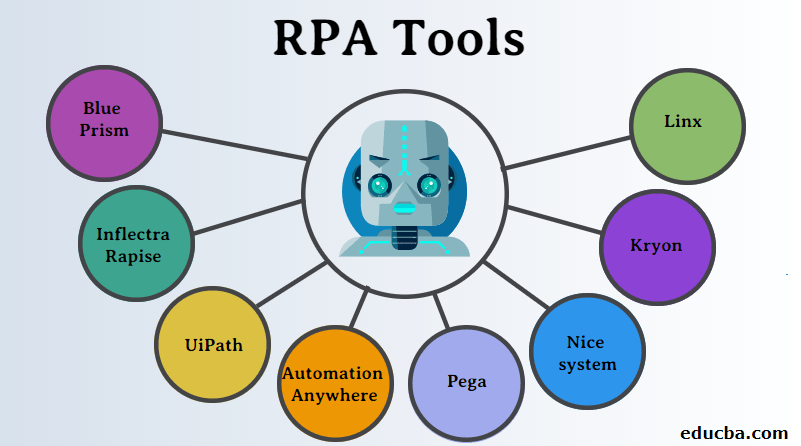
The orchestration modules, which are basically the management consoles for the bots and various processes, are used to manage the functioning. Provides a dashboard for the employee to start/stop or analyze the operations. It is important to understand that no matter the amount of work you put into integrating, programming, and implementing, the bots are still going to run into issues that need to be addressed almost immediately to avoid bottlenecks and customer dissatisfaction.


Trends

Now, you might be wondering what more advancements this decade is going to bring to the sector of automation. Well, now that more than three-quarters of firms use various automation tools already, the RPA is about to bring light to the decision-making frontier. The robots that religiously worked on a carved-out path would now be paired with intelligence and hence could be effectively exploited for problem-solving and reasoning, along with several other benefits.

  • Augmentation with AI.

“Intelligent automation” is not at all a new concept. In fact, it has achieved quite a spotlight in recent years. So what do we expect in the years ahead? Terms like “cognitive automation” are definitely right around the corner. The techies this season are expected to augment their routine RPAs with limitations of rules and AI-backed automation, so that we get a chance to explore new values in the existing workforce capacity and expect an overall increase in task efficiency over all the platforms in a firm, which is basically the overall operating efficiency.

  • Growth in adoption.

It is predicted that the RPA adoption will increase to a wider extent in the coming year, starting in 2020. The RPA interest has obviously been high for a while, but the actual adoption has now taken a pace and is forecasted to hit $2.9 billion by the end of 2021.

  • Possible decrement in the headcount.

Now, the very first thought would be that this kind of extensive automation might lead companies to cut down on their staff, which is kind of the most obvious fear of the employees. And of course, it cannot be avoided, even though cutting down employees is not at all the ultimate goal in almost 47% of the cases, although it’s easier to avoid the HR hassle. This process is based on the fact that the RPAs only require allocating humans and not eliminating them entirely. This way, the human brain could be put to more real-life decision-making which a robot cannot do. And also, it would bring the IT directors and HR closer to working together.  

  • RPAs for security.

RPAs are often looked at as an efficiency tool alone. But it is predicted that these will make their way wider into the data security strategies because the fundamental essence of the system is to eliminate human error, which is the most common error found while managing the data, and is often a major risk factor that could lead to significant missteps and business losses.  


How is RPA different from other conventional automation tools?

The time and money invested are almost a fraction of the traditionally used automation tools. RPA does not disturb the existing setup and environment of the enterprise, which might have cost a huge amount. It is also very flexible and adapts quickly to business changes.


Future aspects
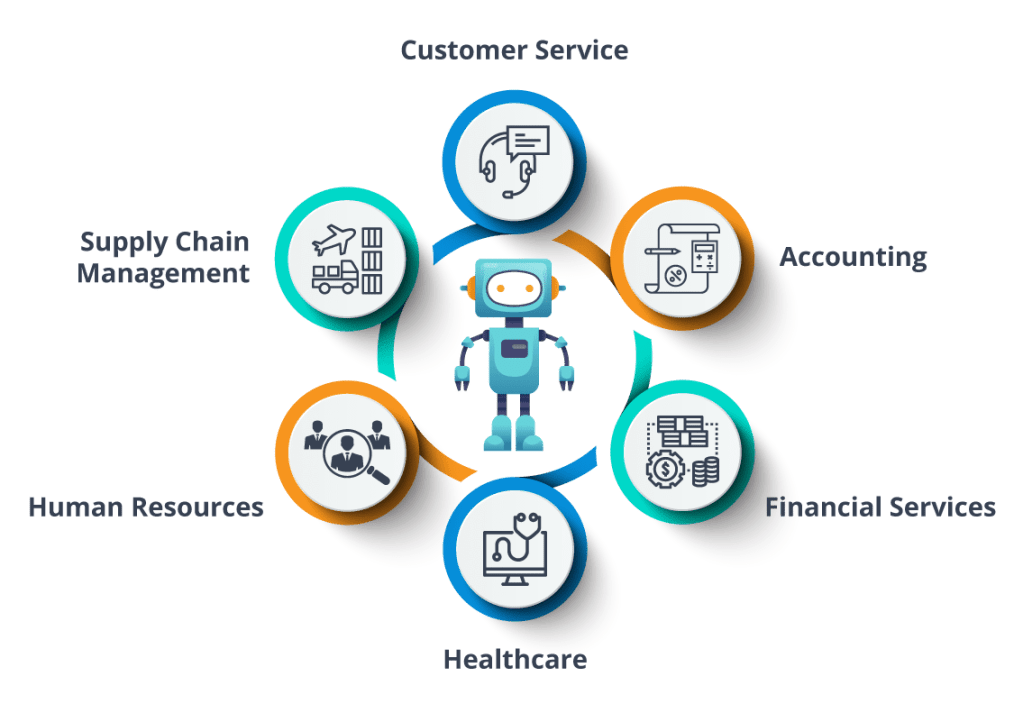
As we have discussed earlier in this article, the RPA market has a CAGR of around 30% currently, and according to the estimation by Forrester, there will be almost 4 million robots doing the administrative office work and sales, and a lot more of the related stuff.  

How soon do you think it will be until the robots take over?

ScanWatch- A medic on your wrist?

CES 2020 brings with it a beautiful, beautiful hybrid smart-watch. Withings launched their ScanWatch this season which is claimed to be the first hybrid smart-watch with a capability to detect sleep apnea and atrial fibrillation.

Withings is a French consumer electronics company. Over years Withings has produced various analog smart-watches. The very recent product, The Steel HR sport smart-watch is a hybrid fitness tracker with an in-built GPS, a heart rate monitor, and oxygen sensors. Withings unveiled another gem at CES 2019 which was an upgraded ECG version of the Steel HR with an embedded Electrocardiogram tracking. It was called the Withings Move.

ScanWatch, with its SPO2 sensor, can read the oxygen saturation level in blood and hence help in detection of potential sleep apnea which is a very common sleep disorder where a person’s breathing stops and starts several times while asleep. This can lead to improper sleep schedules and fatigue. Or snores, for example.

It also features a multi-wavelength PPG sensor and hence uses light waves to measure the blood volume changes (which might lead to serious blood clogs, heart strokes etc.) and in-turn informs the user about any arrhythmia symptoms they might have.

It is fitted with three electrodes so that any minor or major heart rate changes can be recorded at all times using an electrocardiogram tracker. It also provides fitness level assessments using a VO2 max which measures the heart and muscle ability to utilize the oxygen and convert it into energy during any physical activity. An attractive feature here is that the display stays on during the workout sessions so that you can track your progress at all times.

Coming to the specifications, ScanWatch comes with a PMOLED screen and a round display. It is made out of 316L stainless steel casing and has a sapphire glass face. It is water resistant up to 50 meters. Which means you can shower, or even go swimming with your watch on. It has an excellent battery life for a smart-watch. The battery is claimed to last for 30 days on a single charge. Which is super extraordinary as compared to the apple watch which might give you only about 18 hours of maximum usage on a single charge.

It connects to your phone via BLE (Bluetooth Low Energy) and also gives you a hassle free time switching in case you travel a lot. The only physical interaction would be with the side button which can be used to view the heart rate, time, notifications from various applications, or to switch between several workout plans (a total of 30 including cycling, walking and running). It is a bit difficult to read text messages on a small display but it is a good catch anyway. It can also be used as an alarm but it only gives a slight vibration so it might not be very useful for deep sleepers. Again, it will always notify you of all the phone calls even if your phone is somewhere on silent mode. There is a daily step counter at the bottom of the watch which you can set according to your goals which gives a star every time your goal limit is reached. Hence you know where you fall short and your watch is a forever reminder for you to stay active and healthy all the time.

ScanWatch is designed in such a way that you can incorporate it into your daily life considering the elegancy and classicality of the product. The light weight makes it very suitable to wear it during sleep. The belts can be easily switched to match your preferences.

It is compatible with both iOS and Android and uses the Health Mate App to pair. As for the cost, it is currently priced at around $250(about Rs.18000) for the 38mm and around $300(about Rs.21000) for the 42mm variant. As for now, despite using all the necessary hardware and delivering all the promises ScanWatch still awaits approval from the CE in Europe and the FDA clearance in USA. But it is sure to count its steps and rock the shelves in both Europe and USA very soon.

Perpetuity, or no?

The desire to avoid death is universal.

Through the centuries, from the Peaches of Immortality in Chinese mythology, to taunting Jesus and consuming Amrita, from angering the Gods to searching for the Fountain of Youth and the philosopher’s stone, there are several weird mythological theories to back up the concept of Eternal life. Hundreds of legendary minds have given up their life trying to merge the roads to fiction and facts, driven by the desire to unveil the secrets, which in all too many ways ended up driving them mad.

But what if? What if the eternal life was closer than what we could ever imagine?

This is exactly what the initiative 2045 argues. That by the year 2045, humans will beat death. And not by some strange miraculous medical procedures. As suggested by a Russian billionaire Dimitri Itskov, the founder, the main objective of this mega-science project is to create technologies enabling the transfer of an individual’s personality to a more advanced non-biological carrier, and extending life, including to the point of immortality.

The initiative is based on the theory of technological singularity. A point in time (probably around 2045) when artificial intelligence will be able to surpass a man’s abilities. We, as humans, will be able to transfer our consciousness into these highly intelligent robots called Avatars. The goal, as believed, is to enable the fullest possible interaction between the world’s two very complex traditions- science and the society. Let us create not simply a new civilization, but a new mankind.

The project foresees the evolution in the form of four periods of growth identified as ·         2015-2020 The emergence and use of android avatars. These avatars will be based on a brain-computer interface and will hence, be capable of various extreme operations including their use in medicine for rehabilitation of lost senses and the physically disabled with the providence of prosthetic limbs.  

·         2020-2025 The immense automation brought to the life support system will prove to be extremely useful for the people with completely worn out or irreversibly damaged bodies but an intact brain. This way, by linking the human brain to an avatar will allow them to return to a fully functioning body. Bringing such a technology to use will greatly increase the possibility of bio-electronic devices and hence a huge IT revolution.    

·         2030-2035 Designing a computer model of the brain and human consciousness with further means to transfer the latter to an artificial carrier. This step will profoundly change the way the world operates. It will not only give the hope of cybernetic immortality but will also create a human affable artificial intelligence which might in turn empower the ordinary people to restore or modify their brain several times and hence, expand the human capabilities greatly.  

·         2045

The year 2045 has all the ingredients of a good science fiction movie in store! This will be the time when independent minds will receive artificial bodies with capabilities exceeding far from that of the actual human bodies. This will be the time when humanity, for the first time in its history, will make a complete transition and undergo an evolution into completely new species. This will be the time when bodies consisting of Nano-robots will become affordable and attainable by ordinary people. This, the year 2045, will be the time when it would be possible to completely substitute the human brain, by what we call, the neuronal networks which are basically self-learning systems consisting of interconnected units which can imitate the human brain by responding to stimuli and learning from them.  

Where are we now?

The initiative has made some headlines and hence gathered some social supporters too. However, although the social side of the initiative is growing at a reasonable pace, the growth in real scientific and intelligence sector seems stalled. The technology, it exists. And is real. But at this moment, it’s far from what power the brain of homo-sapiens holds and is capable of.

The Critics

The critical aspects of the more ethical and cultural values have risen. These have much in common with the doubts of the seekers of the Philosopher’s Stone and the alchemists in the past. That let’s say Eternal life did exist. Why would it bring peace and serenity to the society? And even if it did, would it be satisfying for the needs of Humanity 2.0?

But either way, the year 2045, singular; or not, could bring with itself the keys to many doors. Technology could open up a new world.

Or, will it be the year in which we once again realize how much there is about us, which we do not understand yet?

Create your own website, free on WordPress.com.Create your own website.
Start free