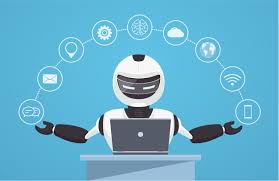
Robotic Process Automation (RPA) is a technology that allows the configuration of computer software and thus enables a “robot” to carry out certain repetitive tasks that previously required human resources. It is responsible for the integration of data whenever a human-digital interaction surfaces and responds to it accordingly by manipulating various applications and hence communicates efficiently over digital platforms that participate in the given business process.
RPA robots are capable of imitating several human tasks, such as copying and pasting data, moving data, logging into various applications, opening e-mails and reading attachments, making calculations, surfing the internet for useful data, reading and writing databases, and a lot more. This means that the valuable human resource could be put to work on high-profile business activities rather than in these mundane rules-based workloads, which can be automated in an ERP-based system. And with an added plus point- robots do not sleep!
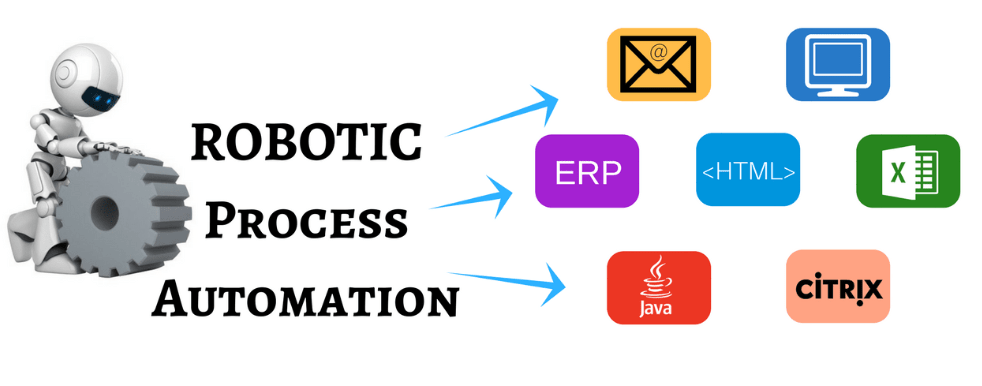
How does this work?
The fundamental unit is the bot.
These robots can be controlled through an employee’s desktop or even the cloud. It is almost necessary to program these and integrate them with the enterprise applications, because even though screen scraping is possible, it is prone to errors since this is a lot of data we are looking at.
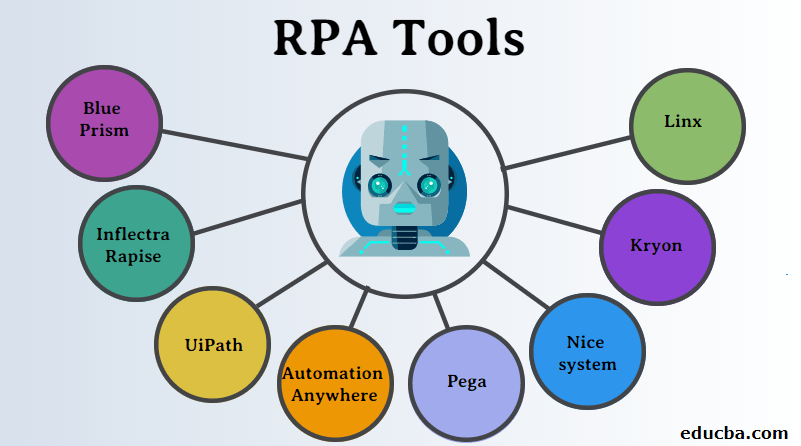
The orchestration modules, which are basically the management consoles for the bots and various processes, are used to manage the functioning. Provides a dashboard for the employee to start/stop or analyze the operations. It is important to understand that no matter the amount of work you put into integrating, programming, and implementing, the bots are still going to run into issues that need to be addressed almost immediately to avoid bottlenecks and customer dissatisfaction.
Trends
Now, you might be wondering what more advancements this decade is going to bring to the sector of automation. Well, now that more than three-quarters of firms use various automation tools already, the RPA is about to bring light to the decision-making frontier. The robots that religiously worked on a carved-out path would now be paired with intelligence and hence could be effectively exploited for problem-solving and reasoning, along with several other benefits.
- Augmentation with AI.
“Intelligent automation” is not at all a new concept. In fact, it has achieved quite a spotlight in recent years. So what do we expect in the years ahead? Terms like “cognitive automation” are definitely right around the corner. The techies this season are expected to augment their routine RPAs with limitations of rules and AI-backed automation, so that we get a chance to explore new values in the existing workforce capacity and expect an overall increase in task efficiency over all the platforms in a firm, which is basically the overall operating efficiency.
- Growth in adoption.
It is predicted that the RPA adoption will increase to a wider extent in the coming year, starting in 2020. The RPA interest has obviously been high for a while, but the actual adoption has now taken a pace and is forecasted to hit $2.9 billion by the end of 2021.
- Possible decrement in the headcount.
Now, the very first thought would be that this kind of extensive automation might lead companies to cut down on their staff, which is kind of the most obvious fear of the employees. And of course, it cannot be avoided, even though cutting down employees is not at all the ultimate goal in almost 47% of the cases, although it’s easier to avoid the HR hassle. This process is based on the fact that the RPAs only require allocating humans and not eliminating them entirely. This way, the human brain could be put to more real-life decision-making which a robot cannot do. And also, it would bring the IT directors and HR closer to working together.
- RPAs for security.
RPAs are often looked at as an efficiency tool alone. But it is predicted that these will make their way wider into the data security strategies because the fundamental essence of the system is to eliminate human error, which is the most common error found while managing the data, and is often a major risk factor that could lead to significant missteps and business losses.
How is RPA different from other conventional automation tools?
The time and money invested are almost a fraction of the traditionally used automation tools. RPA does not disturb the existing setup and environment of the enterprise, which might have cost a huge amount. It is also very flexible and adapts quickly to business changes.
Future aspects
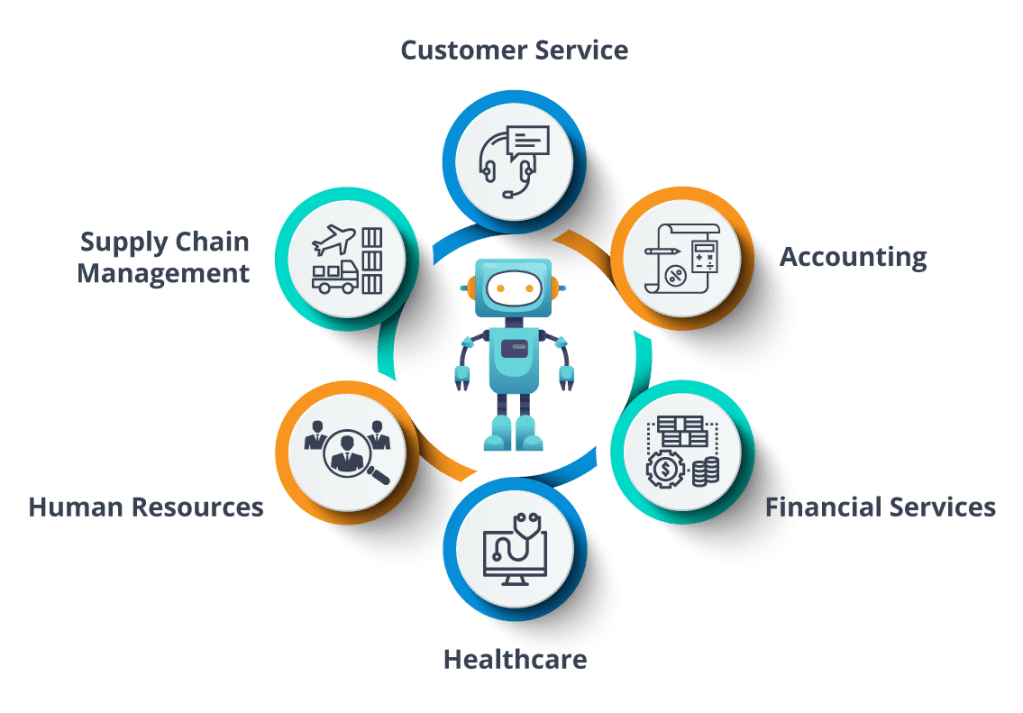
As we have discussed earlier in this article, the RPA market has a CAGR of around 30% currently, and according to the estimation by Forrester, there will be almost 4 million robots doing the administrative office work and sales, and a lot more of the related stuff.
How soon do you think it will be until the robots take over?
 TECHnBUZZ